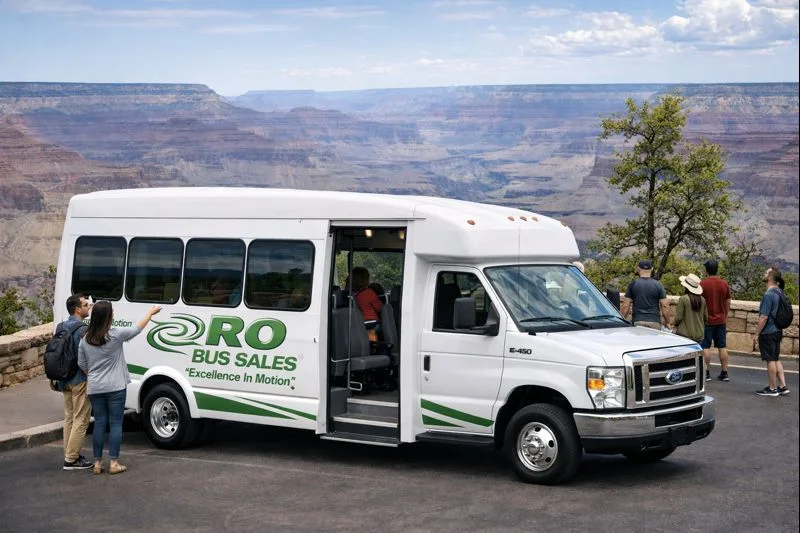
A tour company shuttle bus has a harder job than most vehicles. It needs to keep guests comfortable for hours, handle luggage and gear, stop frequently, and still look sharp in photos. If the layout feels wrong, everyone notices, including your guides, drivers, and repeat customers who write the reviews.
Thank you for reading this post, don't forget to subscribe!At RO Bus Sales, we work with tour operators running city loops, winery routes, day trips, corporate outings, casino and resort tours, and private charters. The common theme stays consistent. Operators want to fit more people into each day without making the vehicle feel like a cramped commuter shuttle. Layout decisions determine whether guests relax, take photos, and enjoy the experience, or spend the whole trip shifting bags, bumping elbows, and wishing the ride would end.
Balancing seats, luggage, and comfort starts long before the first tour. It starts when you choose a tour company shuttle bus layout that matches the trips you actually sell, not the trips you might sell someday.
Start with your most common tour, not the exception
Many operators buy for the biggest day of the year. A festival weekend, a once-a-season convention, a holiday surge. That decision often creates a vehicle that feels oversized on normal days and still fails on peak days because the layout does not match your luggage and boarding patterns.
Instead, build for the tours that pay your bills week after week.
Ask yourself:
How many guests do you usually have on a typical tour?
How long are most of your trips, door to door?
How much luggage, shopping, or gear does each guest bring?
Do guests board once, or do they board and exit repeatedly?
Do you sell premium experiences where comfort drives price?
If most tours run with ten guests carrying day bags, a 12-passenger build can work well. If you run smaller premium groups carrying wine purchases, coolers, golf bags, camera gear, or adventure equipment, a layout with fewer seats and more dedicated storage often delivers a better guest experience and stronger reviews.
Seats do not equal capacity, because baggage changes everything
Operators often think in seat count because it feels like the clearest metric. More seats can mean more revenue. In practice, “capacity” is a blend of:
Seats
Luggage and gear volume
Aisle clearance
Boarding speed
Comfort over time
A tour company shuttle bus that can “seat 14” might feel like a 9-person vehicle once you add wine boxes, coolers, backpacks, and jackets. If bags end up in the aisle or stacked by the door, guests feel cramped and the driver loses safe movement through the cabin. Your guide also struggles to interact naturally when they cannot step into a clear aisle.
The fix is simple: design a storage plan that keeps the aisle open and the door clear.
Luggage and gear space protects the guest experience
Guests notice when their belongings get crammed into awkward places. They also blame your business when their bag gets scuffed, wet, or squeezed under someone else’s feet. If the ride feels disorganized, they assume the whole operation lacks structure, even when your tour itself is excellent.
Good luggage planning makes the vehicle feel calm and premium. It also speeds up stops, which helps your schedule.
Common storage strategies for tour company shuttle bus layouts include:
Rear luggage area for duffels, wine boxes, and bulk gear
Dedicated shelving for day bags and jackets
Mixed seating and storage where you remove or reconfigure rear rows to create a stable cargo zone
Tie-down points and partitions so gear stays put and does not slide into footwells
If your tours include equipment like coolers, picnic baskets, beach gear, golf bags, or cases of wine, build that into the layout so everything has a home that is not someone’s lap. When guests feel organized, they feel cared for.
Comfort is not luxury, it is spacing, sightlines, and flow
Tour guests spend hours seated, listening to your guide, looking out windows, and taking photos. Tight spacing and poor sightlines turn an otherwise great tour into a physical grind. Guests can forgive a simple interior. Guests do not forgive feeling trapped and uncomfortable.
When we think about comfort, we focus on a few essentials:
Legroom in the main seating area
Seat height relative to window lines so guests can actually see the view
Group seating logic so couples and friends can sit together
Aisle width so boarding does not bottleneck
Ride feel over time (heat, noise, vibration, and airflow)
Sometimes dropping a seat row is the best business move, especially if it lets you charge more for a premium experience or increases repeat bookings. A comfortable 11-seat tour can outperform a tight 14-seat tour because guests remember the feeling, not the number.
Boarding and stops: design for repetition
Many tour routes include frequent stops. Scenic overlooks, tasting rooms, photo points, museums, shopping areas. That means repeated boarding and exiting, which magnifies every layout weakness.
If your entrance area clogs, the group loses time at every stop. If bags block the door, guests trip or hesitate. If the aisle narrows near the front, everyone moves slowly.
A layout that supports stop-heavy tours should prioritize:
A clear staging zone near the entry
A luggage plan that never blocks the door
Easy handholds and safe step geometry
Lighting that makes the entry feel secure in low light
Seating flow that avoids pinch points
This is where layout becomes your schedule advantage. Faster, smoother stops mean more time on the experience and less time on logistics.
Choosing the right platform for your routes
Your routes influence which platform fits best, because terrain and parking conditions shape driver stress and guest comfort.
In general terms:
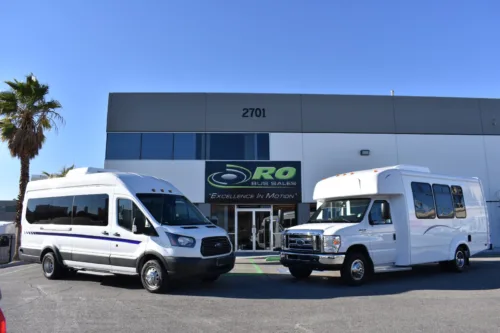
Ford Transit-based builds often work well for city streets, wineries, and scenic routes with tighter turns and smaller parking lots. The ride feels modern, the cabin can feel airy with the right windows, and the exterior photographs cleanly for marketing.
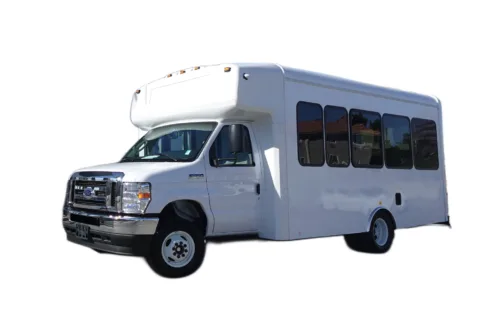
Ford E-Series E-350-based shuttle bodies support a true “mini-bus” style build and can be ideal for higher passenger counts, repeated service, and heavier daily use. This platform can suit hop-on hop-off style routes, group transfers, and charter work where durability and capacity matter.
The “right answer” depends on how you drive. We ask where you operate, how often you hit tight lots, how steep your grades are, and whether you do highway-heavy segments. Then we match chassis and body style to real conditions, not assumptions.
Tour-ready features that elevate your brand without creating maintenance drama
Tour guests remember the small things. They also photograph them. The shuttle becomes part of your brand story, especially when guests post content on social media.
High-impact, practical upgrades include:
USB charging at key seats so phones stay alive for photos
Lighting that feels warm but bright so the cabin looks good in videos
Easy-clean commercial flooring that still looks upscale
Strategic trash control so wrappers and water bottles do not pile up
Interior materials that wipe fast without looking cheap
Brand touches like subtle interior graphics or consistent color accents
The goal is to improve the experience without adding fragile components that cause downtime. A tour vehicle earns money when it runs. Good specs protect uptime.
Example layout thinking by tour type
Here is a practical way to connect layouts to real tour products:
Wine tours: Prioritize storage for wine boxes, a stable rear cargo area, and comfortable spacing. Guests sit for longer stretches and carry purchases at the end.
City loop tours: Prioritize boarding speed and aisle flow. Guests exit frequently and bring smaller day bags.
Day trips and charters: Balance luggage capacity with comfort. Guests might carry jackets, shopping bags, and food.
Adventure tours: Build in gear storage and keep floors and surfaces easy to clean. Wet, dusty, and bulky items show up fast.
When you match layout to tour type, reviews improve because the vehicle feels designed for the experience.
How RO Bus Sales supports tour companies
We do not start with an order form. We start with your business model:
Typical tour length and price point
Average group sizes and private charter demand
Seasonal peaks, weekends, and special events
Luggage and gear reality per guest
Route conditions and parking constraints
Then we recommend a tour company shuttle bus layout that balances seats, luggage, and comfort based on your reality. You get a layout that supports your guides, keeps guests relaxed, and protects revenue per trip by reducing friction.
Design Your Next Tour Company Shuttle Bus With RO Bus Sales
A tour company shuttle bus should feel like part of the experience, not a compromise guests tolerate. The best layouts balance seat count with real luggage needs and comfortable spacing that keeps guests happy for hours.
RO Bus Sales helps tour operators choose shuttle layouts that work on real-world routes. We build on proven Ford Transit and Ford E-350 platforms with commercial-grade interiors that stand up to daily tours and charters.
Share your most common tour, your average group size, and how far you drive. We will sketch a practical layout that fits your operation and your brand. Contact RO Bus Sales to review in-stock options and custom builds for your tour business.