

Ford Transit vs E Series: How to Choose the Right Shuttle for Your Fleet
Ford Transit vs E Series Shuttle, How To Choose The Right Platform For Your Fleet
When fleets compare ford transit vs e series shuttle options, they usually start with the same question, which one is better. In reality, both platforms are strong, the better choice is the one that fits your routes, loads, and maintenance setup.
Thank you for reading this post, don't forget to subscribe!At RO Bus Sales, we build commercial shuttles on both Ford Transit and E Series chassis for agencies, schools, senior living, and private operators across the Western United States. Over and over, we see that the best results come from matching the platform to the real job the vehicle has to do, not just the spec sheet.
This article walks through the practical differences between a ford transit vs e series shuttle so you can make a confident, long term decision for your fleet.
Chassis, driving feel, and how they affect your ford transit vs e series shuttle decision
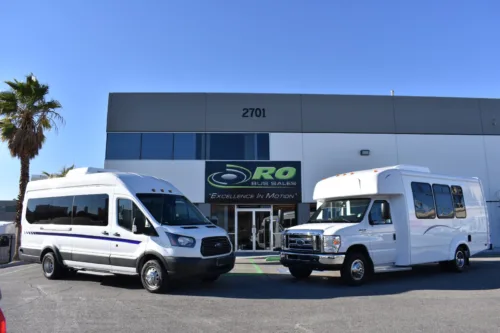
The Ford Transit is a modern, European style van platform with a more automotive feel. Drivers often describe it as easier to maneuver, with a tighter turning radius and smoother ride, especially in urban or suburban environments.
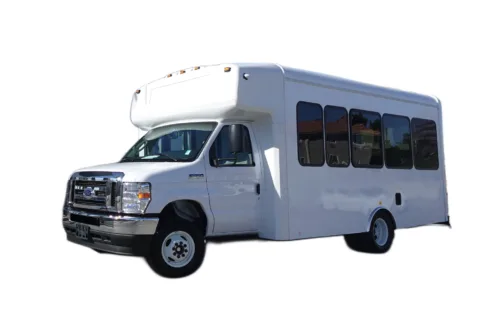
The E Series is a cutaway chassis with a long history in commercial and shuttle applications. It is familiar to many fleet managers and mechanics, and it pairs well with a wide range of body configurations and lengths.
If your routes require a lot of tight turns, city driving, or parking in smaller lots, the Transit may feel more nimble. For heavier duty applications and longer bodies, the E Series often has the edge.
Capacity and configurations
Both platforms can be built in multiple passenger layouts. The right choice depends on how much capacity you need, and how many different configurations you want across your fleet.
Transit based shuttles work well for:
8 to 15 passenger layouts
Mixed seating and wheelchair configurations
Shorter overall length where space is limited
E Series based shuttles are a strong fit when you need:
Higher passenger counts within non CDL thresholds where allowed
More specialized interior layouts
Additional storage or equipment space
Think about your real world loads. How many people are on a typical run, not just at the peak of the day. That answer should guide which platform you favor.
Service, maintenance, and uptime
Many fleets already have experience with one of these platforms in their shop. Leaning into what your technicians know can reduce downtime and simplify parts stocking.
Questions to ask internally:
Which platform do we already maintain successfully
What parts are easier for us to source quickly
Do our drivers have a strong preference based on experience
Transit and E Series are both designed for commercial duty, but the “best” choice is the one your team can keep on the road with confidence.
Accessibility and rider comfort
On the passenger side, both platforms can be upfitted with lifts, ramps, securement, and commercial interiors. The real differentiation comes down to how you plan to use them.
Transit shuttles can feel more like a modern van, which some riders associate with a smoother, quieter ride. E Series shuttles can offer a more traditional bus like interior and wider range of body styles.
If you serve seniors, medical passengers, or high frequency airport riders, pay close attention to:
Step heights and entry experience
Interior lighting and grab points
The feel of the ride on your most common routes
A demo or test route can answer these questions faster than spec sheets.
Budget and total cost of ownership
Initial purchase price is only part of the equation. Consider:
Expected years in service
Projected maintenance over that time
Fuel efficiency on your typical routes
Resale expectations in your market
A well spec’d Transit or E Series shuttle can both deliver solid value. Matching the platform to your specific use case and internal capabilities is what unlocks the best total cost of ownership.
The bottom line
If your routes are more urban, capacity needs are moderate, and you want a modern driving experience, a Transit based shuttle may be the right move. If you need heavier duty flexibility, longer bodies, or you have deep E Series experience in your shop, the E Series may keep your life simpler.
The key is to start with your routes, riders, and maintenance reality, then let those answers point you to the best fit.
Right Size Your Transit Fleet With RO Bus Sales
RO Bus Sales helps transit agencies and public fleets build the right mix of shuttles and vans for local routes, demand response, microtransit, and paratransit service. We focus on commercial grade builds that balance rider comfort, safety, and long term operating costs.
Share your current routes, ridership patterns, and replacement timeline with the RO Bus team, and we will help you compare platforms, layouts, and options that actually fit your service model. Contact RO Bus Sales today to request our latest digital fleet catalog and schedule a no pressure fleet planning conversation.
Related Posts
 Airport Shuttle Buses For Parking And Park And Fly, A Buyer’s Guide
 Employee Shuttle Vans That Staff Actually Want To Ride