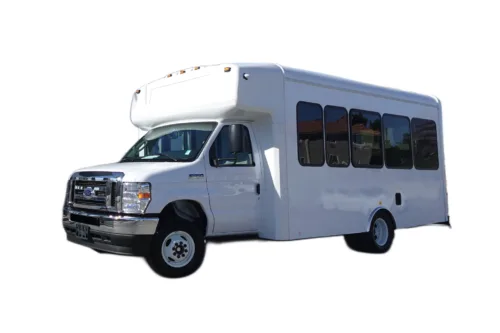
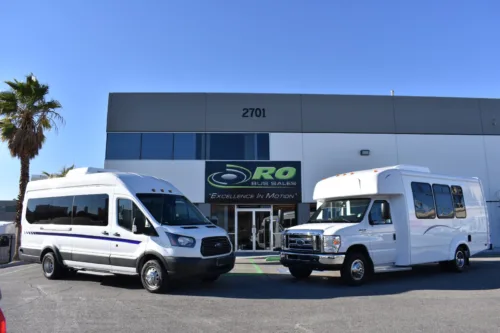
An employee shuttle van does not just move people between parking and the office. It sends a message about how much you value their time, comfort, and safety. In a tight labor market, that message shapes morale, recruiting, retention, and even punctuality. When the shuttle feels miserable, employees avoid it whenever they can. When the shuttle feels easy and comfortable, they build it into their daily routine and talk about it as a benefit.
Thank you for reading this post, don't forget to subscribe!At RO Bus Sales, we work with employers who operate staff shuttles from remote parking lots, transit hubs, hotels, and housing complexes. Some companies start with a repurposed passenger vehicle and quickly discover the downside: unreliable service, crowded aisles, bags everywhere, weak air conditioning, and a ride that leaves people irritated before their shift even starts. Others spec the right employee shuttle van from day one and turn it into part of their employer brand.
The difference usually comes down to a few key decisions at the spec stage, where you choose layout, seating, boarding flow, storage, and the features that shape daily rider experience.
Start with how long employees spend in the shuttle
A five-minute loop from a far lot is not the same as a 30-minute commute from a housing complex. A short route needs speed and durability. A longer route needs comfort, airflow, and noise control so staff arrive ready to work.
When we help spec an employee shuttle van, we start with the real ride conditions:
How long is a typical trip, door to door?
How many trips run per shift change?
What times of day are busiest, and how compressed is the schedule?
Do you run late-night or early-morning service when lighting and safety matter more?
Do riders carry gear, uniforms, tools, or meals?
If your shuttle runs short loops with frequent stops, you should optimize for fast boarding and a layout that prevents bottlenecks. If your shuttle runs longer routes, you should focus on seat comfort, legroom, climate control, and quiet. Those choices directly affect morale.
Comfort and noise control decide whether people actually use the shuttle
If employees arrive already tense from a loud, rough ride, the shuttle hurts morale instead of helping it. People talk about that internally. Over time, it becomes a daily annoyance that undermines your “we care about our team” message.
On an employee shuttle van, we look closely at:
Seat quality (padding, back support, and durability)
Cabin noise at speed (highway and surface streets)
Vibration and ride feel (especially on older pavement)
Climate control strength and how airflow reaches the back rows
Interior materials that reduce echo and feel clean
Comfort is not about luxury trim. Comfort is about arriving without feeling worn down. The right seats, clean airflow, and a quieter cabin can change the entire perception of your shuttle program.
Boarding speed keeps your schedule on track
Every second spent boarding and exiting adds up, especially at shift change. If 20 people funnel through a narrow entry with no handholds, your schedule slips and your driver feels pressured. That pressure then shows up as a rougher ride, more hurried stops, and a worse experience.
Thoughtful design keeps your employee shuttle van moving:
Low, even steps that feel stable
Solid handrails placed where people naturally reach
Wide doors that keep the boarding path clear
A front layout that avoids pinch points near the entry
Step lighting that supports early morning and night service
If you transport employees with mobility challenges, you should spec accessibility from the start. Even if you do not need a full wheelchair layout every day, features like better handholds, lighting, and an entry area designed for calm boarding reduce risk for everyone.
Plan for bags, gear, and uniforms so the cabin stays clean and open
Employees rarely travel empty-handed. Backpacks, lunch bags, duffels, tool kits, uniforms, and equipment show up daily. If there is nowhere to put these items, they end up in aisles and footwells, which makes the cabin feel crowded and unsafe.
A professional employee shuttle van needs a gear plan. Depending on your route and workforce, that plan can include:
Overhead shelves for bags and lunch coolers
Rear storage in a cargo-based upfit used as a shuttle
Mixed seating and storage layouts that keep gear away from the aisle
Partitions or tie-down areas if equipment shifts during stops
When the cabin stays organized, employees feel calmer and the ride feels safer, especially during dark early-morning or late-night runs. The driver also benefits because the aisle stays clear and boarding stays faster.
Climate control is not optional, it is the fastest way to lose riders
If your shuttle runs in heat, cold, or humidity, HVAC performance becomes the number one complaint. People remember the ride where they sweated through their uniform or froze on the way in. If the air feels weak in the back rows, riders spread out and create uneven loading, which makes the shuttle feel “full” even when seats are open.
A strong HVAC plan should include:
Adequate rear cabin airflow
Vents directed toward passenger areas, not just the driver
Interior materials that clean easily without trapping odors
A layout that avoids blocking vents with bags or seat placement
A shuttle that feels comfortable inside increases participation. Participation then reduces parking congestion and improves on-time arrivals.
Safety and professionalism influence how riders feel at night
Many employee shuttle programs run before sunrise and after dark. That changes what matters. Riders care about lighting, predictability, and a sense of order. They also notice whether the vehicle looks maintained.
To support safety and confidence, you want:
Bright step and doorway lighting
Exterior visibility (clean marker lights and reflective touches)
A cabin layout that avoids crowding near the door
Clear signage, rules, and capacity expectations
A clean interior that communicates professionalism
This is not about “looking fancy.” It is about reducing stress. When employees feel safe and comfortable, they ride more consistently.
Branding your employee shuttle van turns it into a culture signal
A good shuttle becomes a moving advertisement for your company culture. It tells employees, applicants, and visitors that you invest in systems that make work easier.
Simple branding elements can do a lot:
Company logo and colors on the exterior
Clear identification so riders know it is the right shuttle
Interior messaging about safety and respect
A professional appearance that stands out in the lot
When employees see a clean, well-kept employee shuttle van with your name on it, you reinforce a powerful message: you respect their time and you plan operations thoughtfully.
How to choose the right size and layout without wasting budget
Many companies overspend by buying “more shuttle than they need,” or they underspend and end up with a vehicle that people refuse to use. The best approach is to match the shuttle to real ridership patterns.
A few practical questions help:
How many riders peak on the busiest shift change?
Do you have staggered breaks that smooth demand, or does everyone move at once?
Do you need seated-only capacity, or do short loops allow occasional standing space?
Do you need an accessible configuration?
Does your route include tight turns or parking constraints that influence vehicle choice?
With those answers, you can pick a layout that balances capacity with comfort and flow.
How RO Bus Sales helps companies design better staff shuttles
We focus on the people who ride the vehicle every day. That starts with your operation, not a generic spec sheet:
Location of parking lots and pickup points
Shift patterns, peak times, and route length
The types of workers you transport and what they carry
Any accessibility needs, lighting needs, or safety requirements
Your goals (recruiting, punctuality, parking relief, retention)
From there, we recommend an employee shuttle van that matches your route and your workforce. Depending on your needs, that might include a higher-capacity shuttle configuration, an accessible layout, or a cargo-based upfit optimized for gear and comfort.
Upgrade Your Employee Shuttle Van With RO Bus Sales
An employee shuttle van is more than a transportation tool. It influences morale, punctuality, and how employees feel before they even clock in. When you spec for comfort, boarding speed, climate control, and gear storage, staff actually want to ride.
RO Bus Sales works with employers to design employee shuttle vans that balance durability and comfort on proven platforms. We build for real-world routes, daily use, and the realities of shift change.
Share your route length, shift schedule, and ridership patterns, and we will walk you through shuttle options that match your workforce. Contact RO Bus Sales to discuss in-stock vehicles and custom builds for your employee shuttle program.