
Airport Shuttle Buses For Parking And Park And Fly, A Buyer’s Guide
If you run an airport parking lot or a park and fly operation, your shuttle acts like your front desk. In fact, many travelers form their first opinion of your business during the ride from your lot to the terminal. Because of that, your shuttle influences reviews, refunds, repeat business, and word of mouth far more than most owners expect.
Thank you for reading this post, don't forget to subscribe!When operators search for an airport shuttle bus for sale, they often compare price and seat count first. That makes sense, but it leaves out the metric that usually determines whether a shuttle makes money or creates headaches: cycle count. Airport parking shuttles run constant loops, open and close doors all day, and handle luggage at nearly every stop. As a result, a vehicle that looks fine on paper can still break down too often, load too slowly, or feel too cramped for real airport volume.
This buyer’s guide walks through what matters most when you shop for an airport shuttle bus for sale for high cycle parking service. More importantly, it explains how the right spec improves speed, safety, and customer satisfaction without adding unnecessary cost.
Think in cycles, not just mileage
Mileage tells you how far the vehicle traveled. Cycles tell you how hard the vehicle worked. For airport parking service, cycles matter more because your shuttle takes repeated stress at the same points, especially the door, steps, entry flooring, and suspension.
A typical airport parking shuttle will:
Load and unload many times per hour
Run stop and go routes with tight turns and curb ramps
Idle frequently at pickup points and terminals
Handle heavy luggage that strikes floors and seats
Operate early mornings and late nights, often in harsh weather
Therefore, you should evaluate an airport shuttle bus for sale like a high use commercial tool, not like a weekend passenger van. Door cycles, step wear, and constant braking will reveal weaknesses fast. In addition, frequent curb approaches can chew through suspension and entry components if the build did not anticipate that use.
When you review a unit, look closely at the areas that take daily abuse: door hardware, step design, thresholds, flooring near the entry, seat mounts, grab handles, and luggage contact zones. Those parts drive downtime, and downtime drives lost revenue.
Choose the right platform for airport duty
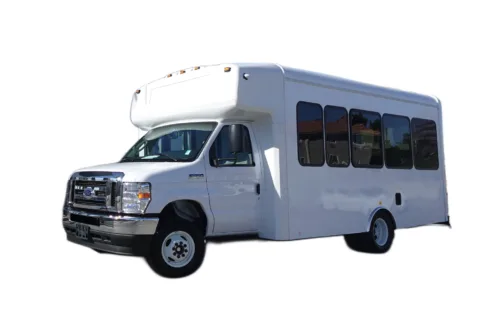
Most parking operators consider two common platforms, Ford Transit based shuttle builds and Ford E Series cutaway based shuttle bodies, typically E350 or E450. Either choice can work well. However, the best option depends on your route length, lot layout, terminal congestion, and passenger volume.
A Transit based shuttle often fits operators who need maneuverability and a modern profile for smaller or tighter lots. Meanwhile, an E Series cutaway shuttle body can support a more bus like build and handle heavy daily cycles with commercial body options.
Instead of picking by preference, match the platform to your operation:
If you navigate tight lanes, compact staging areas, and frequent U turns, favor easier maneuvering and quick entry flow.
If you run higher passenger counts, heavier daily usage, and repeated luggage handling, prioritize commercial body durability and serviceability.
Most importantly, choose the configuration that minimizes downtime and speeds boarding, because those two variables directly affect your customer experience.
Plan for luggage from day one
Every traveler arrives with bags. Some carry roller luggage, backpacks, and car seats. Others bring golf clubs, skis, oversized cases, or multiple checked bags. Consequently, luggage management becomes a throughput issue, not just a comfort issue.
If the shuttle lacks a luggage plan, bags end up in aisles. Then boarding slows, safety risks rise, and drivers feel rushed. In contrast, a smart luggage layout keeps aisles clear, protects passenger space, and accelerates loading.
Common luggage solutions include:
Rear luggage compartments on shuttle bodies
A dedicated rear cargo zone in extended configurations
Interior racks or shelves sized for roller bags
Mixed layouts that trade a few seats for organized luggage space
A slightly lower seat count often moves more people per hour because loading stays smooth and the cabin stays clear. As a result, many operators see better reviews and fewer delays even though the spec sheet shows fewer seats.
Boarding speed and safety drive your profits
Airport parking shuttles win through speed. Every minute lost at each stop multiplies across the day. Additionally, delays create secondary costs, dispatch calls, refunds, and negative reviews that hurt your conversion rate.
For that reason, entry design should sit at the top of your checklist when you evaluate an airport shuttle bus for sale.
Look for:
Step height and step depth that feel stable for tired travelers
High traction step surfaces that perform in rain and heat
Handrails placed where passengers naturally reach
Step lighting and entry lighting for early morning and night runs
Door openings that reduce bottlenecks during peak pickups
When boarding feels safe, passengers move faster without panic. Moreover, a clean entry flow helps the driver load bags efficiently without blocking the door. Ultimately, entry design determines whether your shuttle feels organized or chaotic.
Prioritize interior durability over luxury trim
Airport duty destroys weak interiors. Bags scrape panels, wheels roll across flooring, and constant cleaning wears surfaces down. Therefore, durability should outrank premium features in most parking operations.
A high cycle shuttle should include:
Commercial grade flooring that resists scuffs and cleans fast
Threshold protection at the door and step area
Interior panels that resist scratching and denting
Seat upholstery that handles daily friction and frequent cleaning
Grab handles and rails that stay solid under constant use
In addition, your interior should look professional. Travelers judge your entire business by what they see and smell on that first ride. A clean, durable cabin supports your brand even when you run a nonstop schedule.
HVAC is a deal breaker, especially at the rear rows
Travelers step onto your shuttle after a long drive, a hot parking lot walk, or a crowded terminal. If the cabin feels stuffy or the back rows get weak airflow, customers complain quickly. Consequently, HVAC performance becomes one of the most important comfort specs for airport service.
When you evaluate an airport shuttle bus for sale, check:
Front to rear airflow and vent placement
Rear cabin cooling and heating performance
How quickly the cabin reaches a comfortable temperature
Whether the layout blocks vents with luggage or seat placement
Strong HVAC improves comfort. At the same time, it improves loading speed because passengers settle faster instead of standing in the aisle searching for a cooler spot.
Match your fuel and maintenance plan to your route
Your route profile affects operating cost and reliability. Short loops with constant stops place different stress on the drivetrain than longer runs from remote lots. Similarly, heavy idling changes heat load and maintenance needs.
Before you commit, map your real day:
Distance from lot to terminal
Average loop time at peak, plus off peak
How many trips each vehicle runs per day
How long vehicles idle during pickup periods
Weather, heat load, and seasonal surges
Then choose a platform and build that supports your maintenance reality. If you rely on outside shops, you need a unit that stays simple to service. On the other hand, if you have in house maintenance, you can plan preventive service intervals more aggressively and keep uptime higher.
Either way, downtime costs more than most owners estimate. For that reason, reliability and serviceability should influence your buying decision as much as the purchase price.
New vs used vs cargo upfit, pick based on speed to service
Sometimes a new shuttle makes sense. Other times, a carefully chosen pre owned unit provides the best value. In addition, a cargo based upfit can work well if you need a specific layout or want to test a new lot or route before scaling.
To decide, weigh these factors:
How quickly you need the shuttle in service
Your budget and cash flow strategy
Your expected growth and seasonal demand
Whether you want to pilot a route before buying multiple units
The availability of proven high cycle builds in inventory
If you need immediate service, an in stock airport ready shuttle can protect revenue faster than a long build timeline. Conversely, if you want full control over layout and durability features, an upfit may give you the best long term results.
A practical checklist for buying an airport shuttle bus for sale
Use this checklist to avoid the most common mistakes:
What is my real passengers per trip at peak and off peak?
How many bags per passenger do I typically see?
How many door cycles will this shuttle handle each day?
Does the layout keep the aisle clear when luggage arrives?
Can boarding and unloading happen quickly without crowding?
Does the rear cabin get strong airflow in summer and winter?
Does the interior resist luggage impacts and constant cleaning?
How will I cover service if a vehicle goes down?
Does the entry design help older travelers and families move safely?
When you answer these questions honestly, you can spec the right shuttle with less guesswork.
Choose The Right Airport Shuttle Bus With RO Bus Sales
Airport parking and park and fly shuttles run under constant pressure. High cycles, heavy luggage, frequent stops, and long operating hours demand a vehicle built for commercial duty. Therefore, choosing the right airport shuttle bus for sale means you should prioritize luggage management, boarding speed, HVAC performance, and durable interiors that stand up to daily traffic.
RO Bus Sales helps airport parking operators select shuttles that handle high cycle service. We focus on layouts that keep aisles clear, entry designs that speed boarding, and commercial grade builds designed for real airport work.
Share your lot size, route distance, peak schedule, and average luggage load. Then we will recommend in stock units or custom build options that match your operation. Contact RO Bus Sales today to review airport shuttle bus for sale options that are ready for parking and park and fly duty.
Related Posts
 Employee Shuttle Vans That Staff Actually Want To Ride